Albinism
A genetic condition, its effects, and the particular reality of Guna communities in Panama.
What is albinism?
It is a hereditary, non-contagious condition characterized by the absence of pigmentation (melanin) in the skin, hair, and eyes. It exists in every population in the world, regardless of race, ethnicity, or gender.
In nearly every type of albinism, both parents are carriers of the gene that transmits the disorder, even though they don't show it themselves. There are three clinical types of albinism: oculocutaneous, ocular, and syndromic. Nearly all people with albinism have visual impairments and are prone to skin cancer, since there is no cure for the absence of melanin.
Because of their physical appearance, albinos have been discriminated against, stigmatized, and victimized by false beliefs. Society's ignorance has given rise to superstitious attitudes, fostering their marginalization and social exclusion. These false beliefs have mainly affected women, who are wrongly blamed for transmitting the albinism gene, and who have as a result been subjected to mistreatment and abuse.
Children of the moon, grandchildren of the sun
On the splendorous Caribbean Sea lies the Guna Yala region, homeland of the Guna indigenous people: an archipelago of more than 365 islands, of which 38 organized communities are recognized by the Guna General Congress. The Guna are known worldwide for their culture and the art of the mola.
There is a distinctive feature among the Guna: a high percentage of people with albinism. Within Guna cosmology, albinos are attributed with magical powers; they are considered children of the moon and grandchildren of the sun. But those powers don't spare them from the relentless Panamanian tropical sun, which burns and scars their skin.
There is still no census that would allow an exact count of how many albinos live in Panama, though it is known to be a significant number among the Guna and a small minority among the Afro-descendant population. Guna albinos are concentrated in the Guna Yala region, the Madugandí region, the Wargandí region, and in Guna communities living in Panama City, western Panama province, and the province of Colón.
The sun scars their skin, and ignorance scars their spirit.
Background & legal framework of albinism in Panama
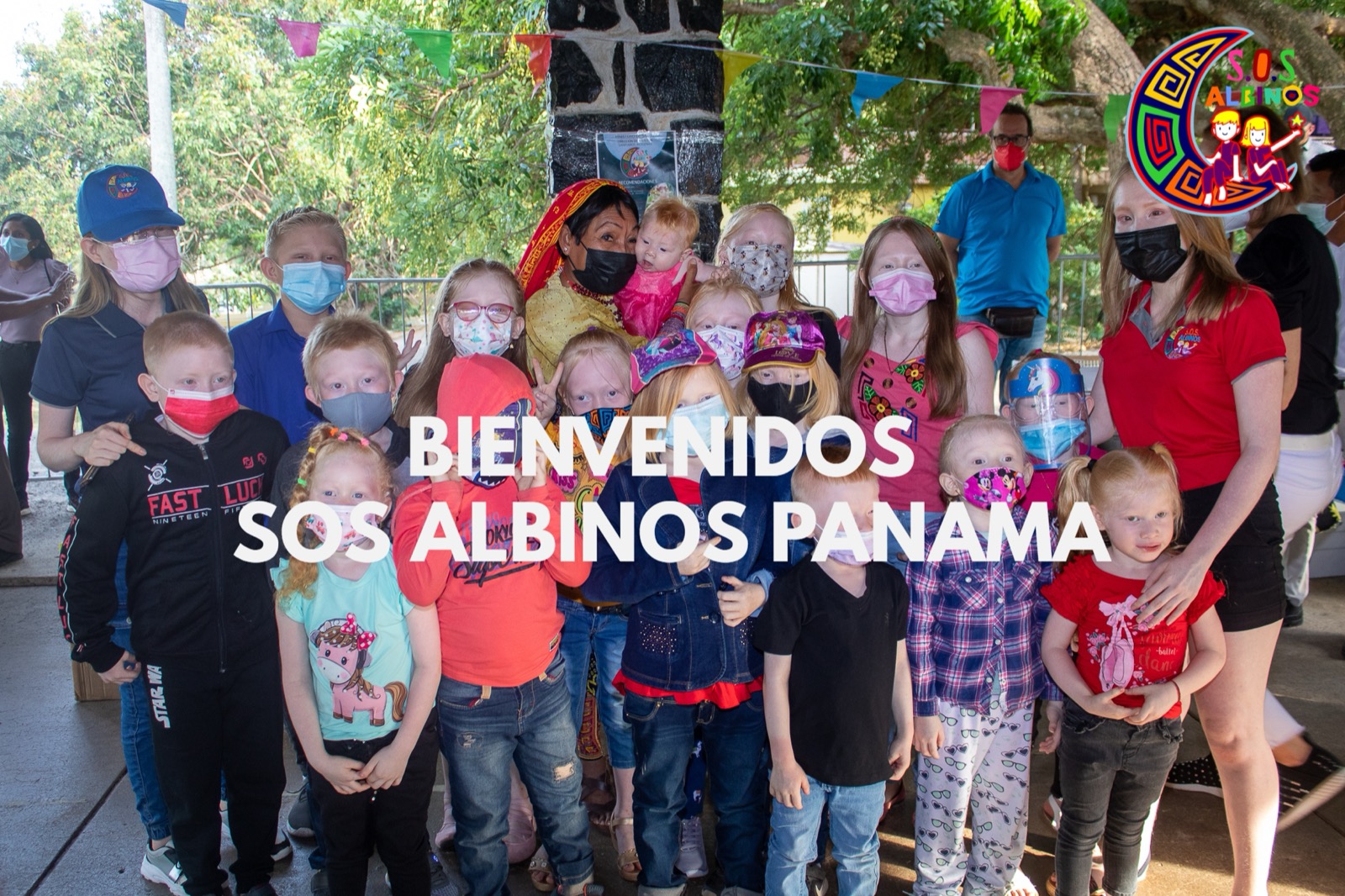
The existence in Panama of an albino population with a high percentage among the Guna indigenous people has drawn the interest of many researchers. However, there is still no precise data confirming how many albinos live in the Republic of Panama. The greatest concentration is mostly among the Guna, with a small number among the Afro-descendant and mestizo population.
Panama's tropical location, specifically the Guna Yala islands, intensifies the harmful effects of the sun's rays, which are more intense in this area, giving albinos a greater propensity to develop skin cancer.
The albino population, because of their condition, needs special attention; beyond the difficulties with their skin and vision problems, they face a bigger problem: discrimination and rejection, which generate a great deal of fear about being accepted socially.
Panamanian law did not previously address the specific challenges faced by albinos from a humane perspective. The National Secretariat for Disability (SENADIS) exists, created on August 27, 1999 through Law No. 42, which establishes equal opportunity for people with disabilities, with public policies on health and education that guarantee their inclusion and integration into society.
Law 210
The road to the law
In 2018, the SOS Albinos Foundation delivered to Deputy Petita Ayarza the first draft of a bill that would provide protection and support to people with albinism in Panama. On July 22, 2019, Bill No. 115 was introduced, declaring June 13 as National Albinism Awareness Day, backed by Deputies Petita Ayarza, Kayra Harding, Cenobia Vargas, Alina González, and Gonzalo González. With a unanimous vote across party lines, the bill was approved and sent to the Executive for its signature.
The presidential signature
On April 27, 2021, the President of the Republic, Laurentino Cortizo, signed Law 210 into effect, declaring June 13 of every year National Albinism Awareness Day, ruling out any form of discrimination, and guaranteeing timely social and medical care. The law creates the National Health Office within the Ministry of Health, working jointly with the Social Security Fund, and involves the Ministries of Education, Social Development, and Labor, SENADIS, the National Institute of Statistics and Census, and IFARHU.
For the SOS Albinos Foundation, this law represents an achievement and a step forward in the work it has carried out since its founding. Panama became the first country in the region to pass a law protecting people with albinism, and the second in the world — the first was Guinea-Conakry, on April 6, 2021. This step, in terms of human rights, represents hope for the albino community in Panama and elsewhere in the world.
International Albinism Awareness Day
The situation faced by albinos in some parts of the world has caused concern in the international community. On June 24, 2013, the United Nations Human Rights Council adopted a resolution establishing that all people have the right to life, liberty, and security, and that no one should be subjected to torture or cruel and inhuman treatment, calling on Member States to adopt effective measures to eliminate all forms of discrimination against people with albinism.
Albinos have been victims of ignorance and cruelty in some countries around the world, which have developed myths and false beliefs, witchcraft rituals, mutilations, and other cruelties against them.
This inhumane treatment led the United Nations to take action: on December 18, 2014, the UN General Assembly proclaimed, by resolution, June 13 as International Albinism Awareness Day. Since then, this date has been observed in every country in the world.
Find out how you can support the albino community
Events, supply drives, health partnerships, and donations: there are many ways to get involved.